These records are found in the online catalog of The Mariners’ Museum and Park in Newport News, Virginia. Uncurated search results are presented to give researchers and interested readers an idea of whether the museum’s archives contain information about this vessel and whether it may be worthwhile to visit the museum’s catalog search page for further investigation. Uncurated results may be inaccurate or incomplete.
Mariners Museum online catalog search, July 12, 2026. Search phrase: "Genie". Catalog returned 11 records; this selection table includes 11 records fetched through catalog result pages.
Use these buttons to send uncurated search results to your own app or text document for further research. First, check the box for any row, or click "Select All" then uncheck any rows. Then click "Show Selections". You can then copy your selections from the text box and past them into your app.
Fetch?
Row ID
Media
Date
Vessel
Place
Related Places
Inscription/Marks
Subject
Notes
Archive Number
1
Fort Boykin (Va.).; Isle of Wight County (Va.)–History
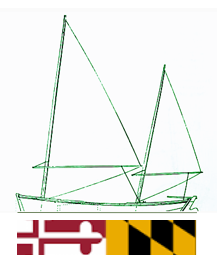
“Genie” Pruitt, 61, is a waterman with a history degree. He taught briefly, but soon learned the classroom wasn't for him. "I needed to get back home and work and keep busy." His other predictable nickname: "Professor." Pruitt crab pots in the summer, and in the winter used to dredge for crabs until that practice was banned in Virginia in 2008 ("They're trying to starve me," he says). "I work my tail off but I really like it." This Tangier Islander plies his trade from a 45-foot deadrise named after his mother, the Betty Jean and maintains about 425 crab pots: "the maximum the law allows – we used to get 500."
MARE ISLAND - VALLEJO - CALIFORNIA - UNITED STATES - Maker
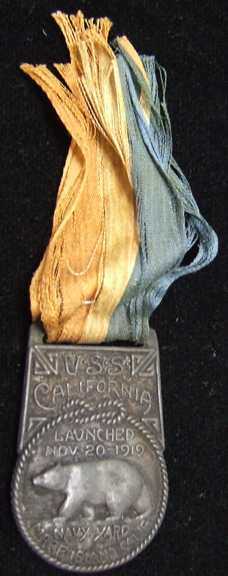
SHORT DESCRIPTION: Medal commemorating the launch of the battleship USS California on November 20, 1919. The medal is attached to a tattered red, white and blue ribbon. VESSEL INFORMATION: VESSEL NAME: USS CALIFORNIA (BB-44) SHIPBUILDER: MARE ISLAND NAVY YARD LAUNCH DATE: NOVEMBER 20, 1919 DISPOSITION: Decommissioned February 14, 1947. Struck March 1, 1959. Sold for scrap July 10, 1959. VESSEL HISTORY: Beginning as the flagship of the Pacific Fleet, she served in the Pacific her entire career. She was sunk in the attack on Pearl Harbor at her moorings in Battleship Row, but was salvaged and reconstructed. She served again for the remainder of World War II before being decommissioned as obsolete in 1947. ADDITIONAL INFORMATION: Excepts from Navy Press Release dated May 4, 1937. The Navy Department has been informed that Rear Admiral Robert Stocker, Construction Corps, United States Navy, Retired, died in Hampton, Virginia yesterday…Rear Admiral Stocker retired from active duty on March 1, 1925 after forty-two years of active service. For his service during the World War as Assistant Chief of the Bureau of Construction and Repair he was awarded the Navy Cross. He was born in New Elm, Minnesota, on January 30, 1866 and was appointed to the Naval Academy from that State in 1883. After graduation, he served in the USS Boston, USS Trenton and USS Yorktown, and in 1890 went to Paris for a post-graduate course in naval architecture at the Ecole des Mines and Ecole du Genie Maritime. He was appointed assistant naval constructor with the rank of lieutenant (junior grade) in July 1891. On returning to the United States in December 1893, after a short tour of duty at the Bureau of Construction and Repair, Navy Department, Washington, D.C. he was assigned in February 1894 to duty as Assistant to the Superintending Constructor at Newport News, Va., and later in October 1900 as Superintending Constructor at the same place. While he was on duty here the construction of the Kearsarge, Kentucky, Illinois, Nashville, Wilmington and Helena were undertaken. He was commissioned Naval Constructor with the rank of Lieutenant in November 1897. In May 1901 he was appointed head of the Construction and Repair Department at the Navy Yard, Norfolk, serving at that Navy Yard until May 1907. He was promoted to the rank of Commander in November 1903. In May 1907 he was transferred to Washington, D.C. as a Member of the Board of Inspection and Survey; and in June 1911 he was assigned to the Navy Yard, New York as the Construction Officer. While on duty at the Navy Yard he had charge of the construction of the battles ships New York and Arizona. In September 1915 he was assigned to duty in charge of Design and Construction in the Bureau of Construction and Repair. It was during that time that he was on this duty that a large wartime building program of the U.S. Navy was accomplished; he was immediately responsible for much of this work. In 1916 he became Assistant Chief of the Bureau of Construction and Repair. He was promoted to Captain in August 1916 and Rear Admiral in January 1923. In October 1923 he was transferred to duty as Superintending Constructor at Newport News with additional duty as Senior Member of the Navy Section of the Army and Navy Munitions Board July 1924 to February 28, 1925. [text of Navy Cross citation]…He was also awarded the Spanish Campaign Medal, 1898, Spanish-American War, and the Victory medal for World War service. Rear Admiral Stocker was a member of the Society of Naval Architects and Marine Engineers. Rear Admiral Stocker was an outstanding technical officer of the Navy; as a naval architect, thoroughly familiar with the needs and requirements of the fleet, his services were of great value to the Navy and his contributions to the National defense in war time were outstanding. During the period of expansion of the Navy and of the development of new types of vessels to meet new Service requirements his work was notable. He enjoyed confidence and respect of naval officers generally who recognized his technical ability and his unselfish devotion to the interests of the Naval Service.
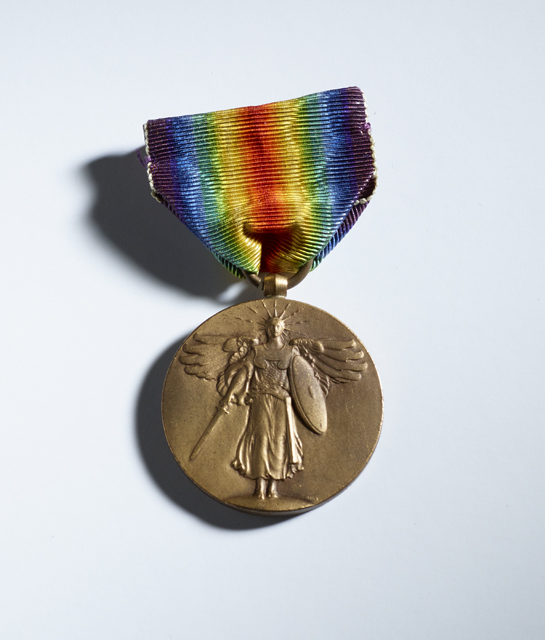
SHORT DESCRIPTION: WWI Victory medal. The medal is suspended from a rainbow colored ribbon by a ring. The obverse of the medal shows a representation of Victory, in this case wearing a spiked crown. The reverse has an American shield and the names of 14 allied and associated nations. Atop the shield is a fasces, a medieval battle axe. Six stars across the bottom. NOTES: Medal awarded to Captain Robert Stocker of the Bureau of Construction and Repair. NOTES: The medal was designed by prominent sculptor James Earle Fraser and was endorsed by the Secretary of War Newton D. Baker on 14 November 1919. The ribbon was designed by Army Col. T. Bentley Mott. World War I Victory Medal. This medal was awarded to personnel who served in the armed forces between April 6, 1917 and Nov. 11, 1918. Also given to those who served later in Russia of Siberia. ADDITIONAL INFORMATION: Excepts from Navy Press Release dated May 4, 1937. The Navy Department has been informed that Rear Admiral Robert Stocker, Construction Corps, United States Navy, Retired, died in Hampton, Virginia yesterday…Rear Admiral Stocker retired from active duty on March 1, 1925 after forty-two years of active service. For his service during the World War as Assistant Chief of the Bureau of Construction and Repair he was awarded the Navy Cross. He was born in New Elm, Minnesota, on January 30, 1866 and was appointed to the Naval Academy from that State in 1883. After graduation, he served in the USS Boston, USS Trenton and USS Yorktown, and in 1890 went to Paris for a post-graduate course in naval architecture at the Ecole des Mines and Ecole du Genie Maritime. He was appointed assistant naval constructor with the rank of lieutenant (junior grade) in July 1891. On returning to the United States in December 1893, after a short tour of duty at the Bureau of Construction and Repair, Navy Department, Washington, D.C. he was assigned in February 1894 to duty as Assistant to the Superintending Constructor at Newport News, Va., and later in October 1900 as Superintending Constructor at the same place. While he was on duty here the construction of the Kearsarge, Kentucky, Illinois, Nashville, Wilmington and Helena were undertaken. He was commissioned Naval Constructor with the rank of Lieutenant in November 1897. In May 1901 he was appointed head of the Construction and Repair Department at the Navy Yard, Norfolk, serving at that Navy Yard until May 1907. He was promoted to the rank of Commander in November 1903. In May 1907 he was transferred to Washington, D.C. as a Member of the Board of Inspection and Survey; and in June 1911 he was assigned to the Navy Yard, New York as the Construction Officer. While on duty at the Navy Yard he had charge of the construction of the battles ships New York and Arizona. In September 1915 he was assigned to duty in charge of Design and Construction in the Bureau of Construction and Repair. It was during that time that he was on this duty that a large wartime building program of the U.S. Navy was accomplished; he was immediately responsible for much of this work. In 1916 he became Assistant Chief of the Bureau of Construction and Repair. He was promoted to Captain in August 1916 and Rear Admiral in January 1923. In October 1923 he was transferred to duty as Superintending Constructor at Newport News with additional duty as Senior Member of the Navy Section of the Army and Navy Munitions Board July 1924 to February 28, 1925. [text of Navy Cross citation]…He was also awarded the Spanish Campaign Medal, 1898, Spanish-American War, and the Victory medal for World War service. Rear Admiral Stocker was a member of the Society of Naval Architects and Marine Engineers. Rear Admiral Stocker was an outstanding technical officer of the Navy; as a naval architect, thoroughly familiar with the needs and requirements of the fleet, his services were of great value to the Navy and his contributions to the National defense in war time were outstanding. During the period of expansion of the Navy and of the development of new types of vessels to meet new Service requirements his work was notable. He enjoyed confidence and respect of naval officers generally who recognized his technical ability and his unselfish devotion to the interests of the Naval Service.
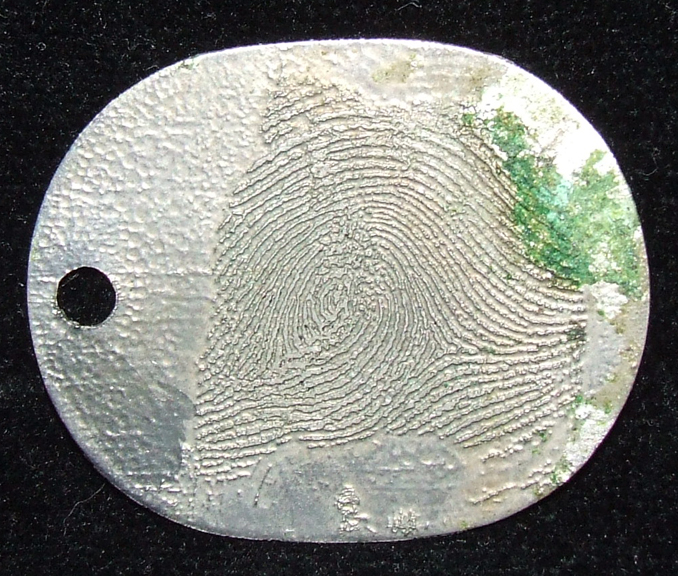
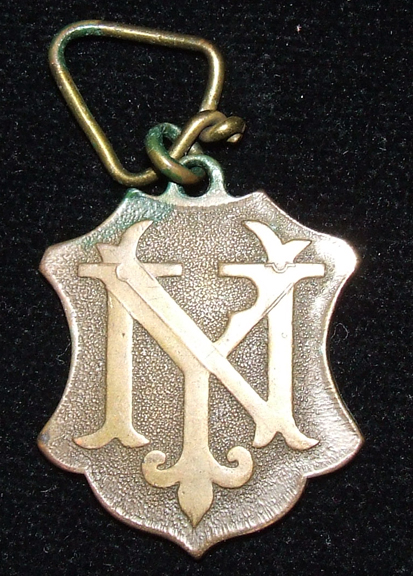
SHORT DESCRIPTION: Metal dog tag. ADDITIONAL INFORMATION: Excepts from Navy Press Release dated May 4, 1937. The Navy Department has been informed that Rear Admiral Robert Stocker, Construction Corps, United States Navy, Retired, died in Hampton, Virginia yesterday…Rear Admiral Stocker retired from active duty on March 1, 1925 after forty-two years of active service. For his service during the World War as Assistant Chief of the Bureau of Construction and Repair he was awarded the Navy Cross. He was born in New Elm, Minnesota, on January 30, 1866 and was appointed to the Naval Academy from that State in 1883. After graduation, he served in the USS Boston, USS Trenton and USS Yorktown, and in 1890 went to Paris for a post-graduate course in naval architecture at the Ecole des Mines and Ecole du Genie Maritime. He was appointed assistant naval constructor with the rank of lieutenant (junior grade) in July 1891. On returning to the United States in December 1893, after a short tour of duty at the Bureau of Construction and Repair, Navy Department, Washington, D.C. he was assigned in February 1894 to duty as Assistant to the Superintending Constructor at Newport News, Va., and later in October 1900 as Superintending Constructor at the same place. While he was on duty here the construction of the Kearsarge, Kentucky, Illinois, Nashville, Wilmington and Helena were undertaken. He was commissioned Naval Constructor with the rank of Lieutenant in November 1897. In May 1901 he was appointed head of the Construction and Repair Department at the Navy Yard, Norfolk, serving at that Navy Yard until May 1907. He was promoted to the rank of Commander in November 1903. In May 1907 he was transferred to Washington, D.C. as a Member of the Board of Inspection and Survey; and in June 1911 he was assigned to the Navy Yard, New York as the Construction Officer. While on duty at the Navy Yard he had charge of the construction of the battles ships New York and Arizona. In September 1915 he was assigned to duty in charge of Design and Construction in the Bureau of Construction and Repair. It was during that time that he was on this duty that a large wartime building program of the U.S. Navy was accomplished; he was immediately responsible for much of this work. In 1916 he became Assistant Chief of the Bureau of Construction and Repair. He was promoted to Captain in August 1916 and Rear Admiral in January 1923. In October 1923 he was transferred to duty as Superintending Constructor at Newport News with additional duty as Senior Member of the Navy Section of the Army and Navy Munitions Board July 1924 to February 28, 1925. [text of Navy Cross citation]…He was also awarded the Spanish Campaign Medal, 1898, Spanish-American War, and the Victory medal for World War service. Rear Admiral Stocker was a member of the Society of Naval Architects and Marine Engineers. Rear Admiral Stocker was an outstanding technical officer of the Navy; as a naval architect, thoroughly familiar with the needs and requirements of the fleet, his services were of great value to the Navy and his contributions to the National defense in war time were outstanding. During the period of expansion of the Navy and of the development of new types of vessels to meet new Service requirements his work was notable. He enjoyed confidence and respect of naval officers generally who recognized his technical ability and his unselfish devotion to the interests of the Naval Service.
PHILADELPHIA - PENNSYLVANIA - UNITED STATES - Related Place; LONDON - ENGLAND - Related Place
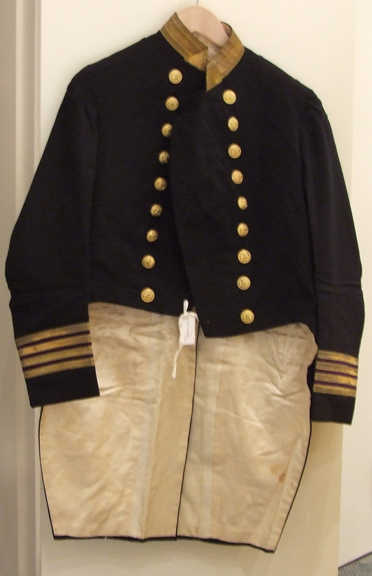
SHORT DESCRIPTION: Special full dress uniform coat for captain of the construction corps. Sleeve decoration includes four stripes of gold braid backed with dark violet. Gold braid at the collar. There are two hard shoulder boards made by the William H. Horstman Company of Philadelphia. ADDITIONAL INFORMATION: Excepts from Navy Press Release dated May 4, 1937. The Navy Department has been informed that Rear Admiral Robert Stocker, Construction Corps, United States Navy, Retired, died in Hampton, Virginia yesterday…Rear Admiral Stocker retired from active duty on March 1, 1925 after forty-two years of active service. For his service during the World War as Assistant Chief of the Bureau of Construction and Repair he was awarded the Navy Cross. He was born in New Elm, Minnesota, on January 30, 1866 and was appointed to the Naval Academy from that State in 1883. After graduation, he served in the USS Boston, USS Trenton and USS Yorktown, and in 1890 went to Paris for a post-graduate course in naval architecture at the Ecole des Mines and Ecole du Genie Maritime. He was appointed assistant naval constructor with the rank of lieutenant (junior grade) in July 1891. On returning to the United States in December 1893, after a short tour of duty at the Bureau of Construction and Repair, Navy Department, Washington, D.C. he was assigned in February 1894 to duty as Assistant to the Superintending Constructor at Newport News, Va., and later in October 1900 as Superintending Constructor at the same place. While he was on duty here the construction of the Kearsarge, Kentucky, Illinois, Nashville, Wilmington and Helena were undertaken. He was commissioned Naval Constructor with the rank of Lieutenant in November 1897. In May 1901 he was appointed head of the Construction and Repair Department at the Navy Yard, Norfolk, serving at that Navy Yard until May 1907. He was promoted to the rank of Commander in November 1903. In May 1907 he was transferred to Washington, D.C. as a Member of the Board of Inspection and Survey; and in June 1911 he was assigned to the Navy Yard, New York as the Construction Officer. While on duty at the Navy Yard he had charge of the construction of the battles ships New York and Arizona. In September 1915 he was assigned to duty in charge of Design and Construction in the Bureau of Construction and Repair. It was during that time that he was on this duty that a large wartime building program of the U.S. Navy was accomplished; he was immediately responsible for much of this work. In 1916 he became Assistant Chief of the Bureau of Construction and Repair. He was promoted to Captain in August 1916 and Rear Admiral in January 1923. In October 1923 he was transferred to duty as Superintending Constructor at Newport News with additional duty as Senior Member of the Navy Section of the Army and Navy Munitions Board July 1924 to February 28, 1925. [text of Navy Cross citation]…He was also awarded the Spanish Campaign Medal, 1898, Spanish-American War, and the Victory medal for World War service. Rear Admiral Stocker was a member of the Society of Naval Architects and Marine Engineers. Rear Admiral Stocker was an outstanding technical officer of the Navy; as a naval architect, thoroughly familiar with the needs and requirements of the fleet, his services were of great value to the Navy and his contributions to the National defense in war time were outstanding. During the period of expansion of the Navy and of the development of new types of vessels to meet new Service requirements his work was notable. He enjoyed confidence and respect of naval officers generally who recognized his technical ability and his unselfish devotion to the interests of the Naval Service.
SHORT DESCRIPTION: Medal commemorating the launch of the battleship USS New York on October 30, 1912. NOTES: Excepts from Navy Press Release dated May 4, 1937. The Navy Department has been informed that Rear Admiral Robert Stocker, Construction Corps, United States Navy, Retired, died in Hampton, Virginia yesterday…Rear Admiral Stocker retired from active duty on March 1, 1925 after forty-two years of active service. For his service during the World War as Assistant Chief of the Bureau of Construction and Repair he was awarded the Navy Cross. He was born in New Elm, Minnesota, on January 30, 1866 and was appointed to the Naval Academy from that State in 1883. After graduation, he served in the USS Boston, USS Trenton and USS Yorktown, and in 1890 went to Paris for a post-graduate course in naval architecture at the Ecole des Mines and Ecole du Genie Maritime. He was appointed assistant naval constructor with the rank of lieutenant (junior grade) in July 1891. On returning to the United States in December 1893, after a short tour of duty at the Bureau of Construction and Repair, Navy Department, Washington, D.C. he was assigned in February 1894 to duty as Assistant to the Superintending Constructor at Newport News, Va., and later in October 1900 as Superintending Constructor at the same place. While he was on duty here the construction of the Kearsarge, Kentucky, Illinois, Nashville, Wilmington and Helena were undertaken. He was commissioned Naval Constructor with the rank of Lieutenant in November 1897. In May 1901 he was appointed head of the Construction and Repair Department at the Navy Yard, Norfolk, serving at that Navy Yard until May 1907. He was promoted to the rank of Commander in November 1903. In May 1907 he was transferred to Washington, D.C. as a Member of the Board of Inspection and Survey; and in June 1911 he was assigned to the Navy Yard, New York as the Construction Officer. While on duty at the Navy Yard he had charge of the construction of the battles ships New York and Arizona. In September 1915 he was assigned to duty in charge of Design and Construction in the Bureau of Construction and Repair. It was during that time that he was on this duty that a large wartime building program of the U.S. Navy was accomplished; he was immediately responsible for much of this work. In 1916 he became Assistant Chief of the Bureau of Construction and Repair. He was promoted to Captain in August 1916 and Rear Admiral in January 1923. In October 1923 he was transferred to duty as Superintending Constructor at Newport News with additional duty as Senior Member of the Navy Section of the Army and Navy Munitions Board July 1924 to February 28, 1925. [text of Navy Cross citation]…He was also awarded the Spanish Campaign Medal, 1898, Spanish-American War, and the Victory medal for World War service. Rear Admiral Stocker was a member of the Society of Naval Architects and Marine Engineers. Rear Admiral Stocker was an outstanding technical officer of the Navy; as a naval architect, thoroughly familiar with the needs and requirements of the fleet, his services were of great value to the Navy and his contributions to the National defense in war time were outstanding. During the period of expansion of the Navy and of the development of new types of vessels to meet new Service requirements his work was notable. He enjoyed confidence and respect of naval officers generally who recognized his technical ability and his unselfish devotion to the interests of the Naval Service. VESSEL INFORMATION: VESSEL NAME: USS NEW YORK (BB-34) SHIPBUILDER: BROOKLYN NAVY YARD LAUNCH DATE: OCTOBER 30, 1912 DISPOSITION: Decommissioned August 29, 1946. Employed as a target ship in the atomic bomb tests at Bikini Atoll. Later sunk as a target on 7/8/1948 by aircraft and naval gunfire 40 miles SW of Pearl Harbor VESSEL HISTORY: The ship saw action in both World War I and World War II.
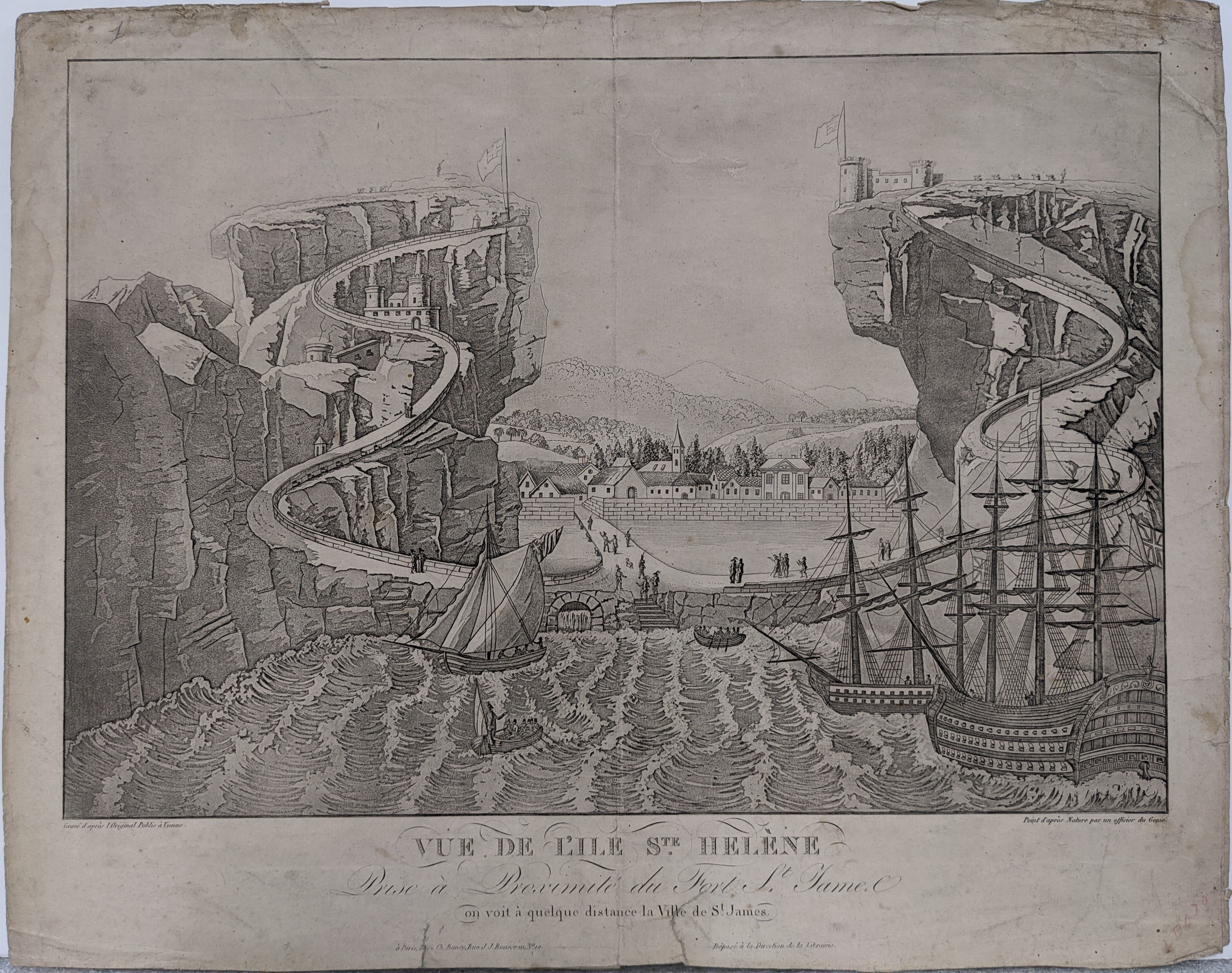
RUE J.J. ROUSSEAU NO. 10 - PARIS - FRANCE - Publisher; JAMESTOWN - ST. HELENA - UNITED KINGDOM - Related Place
NOTES: Jamestown sits on the north side of St. Helena facing a huge expanse of the Atlantic Ocean. The anchorage in front of the town is from 8 to 25 fathoms deep. The town lies between two large hills, Mundens on the east and Ladder Hill on the west, both are fortified with cannon. There is a fort on Ladder Hill that contains barracks and quarters for the military establishment. It is connected to the town by a ladder of seven hundred steps while a carriage road zig-zags up the steep hill. A signal station sits at the top of the ladder. The town’s sea-facing side is protected by a well-built curtain wall. A road from the landing steps of the wharf, bordered on the land side by a deep moat, leads over a moated drawbridge through an arched portcullised gateway onto a spacious square called the lower parade. The chief building off the square is the Fort (Fort James) or Castle.
PHILADELPHIA - PENNSYLVANIA - UNITED STATES - Related Place
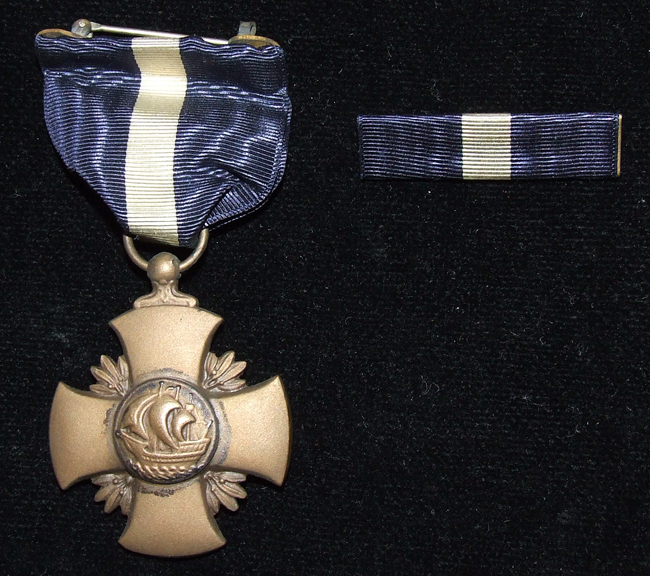
SHORT DESCRIPTION: Navy Cross medal and ribbon. The obverse of the Navy Cross is a modified cross patée one and a half inches wide (the ends of its arms are rounded whereas a conventional cross patée has arms that are straight on the end). There are four laurel leaves with berries in each of the re-entrant arms of the cross. In the center of the cross a sailing vessel is depicted on waves, sailing to the viewer's left. The vessel is a symbolic caravel of the type used between 1480 and 1500. Fraser selected the caravel because it was a symbol often used by the Naval Academy and because it represented both naval service and the tradition of the sea. The laurel leaves with berries refer to achievement. The the center of the reverse of a bronze cross patée one and a half inches wide, crossed anchors from the pre-1850 period, with cables attached. The letters USN appear amid the anchors. The ribbon is navy blue with a center stripe of white. the blue alludes to Navy service and the white represents the purity of selflessness. NOTES: The text of the Navy Cross citation for Robert Stocker states: The President of the United States of America takes pleasure in presenting the Navy Cross to Captain Robert Stocker, United States Navy, for exceptionally meritorious service in a duty of great responsibility as Assistant Chief of Bureau of Construction and Repair, and in charge of the design division of that bureau; and, specifically, for the design of the Eagle class of vessels, the designs for which were completed in an unprecedented short time and contained many novel and original features. NOTES: The Navy Cross was authorized by Act of Congress February 4, 1919, for the United States Navy and Marine Corps. The Navy Cross could be granted also for peacetime heroism until the Act of Congress of August 7, 1942, which restricted it to heroism in combat. BADGE: Dark bronze cross with dark bronze flames between each arm of the cross. Center medallion portrays a sailing ship and reverse has crossed anchors with the letters U and S BETWEEN THE SPOKES OF THE ANCHOR AND THE LETTER n BELOW. More recent issues are of a lighter colored bronze. After World War I, as noted, the early examples of the Navy Cross were almost black and as a large number were issued posthumously, they were called, with gallows humor, the "Black Widows." The design of the Navy Cross derives from the British Distinguished Service Cross, as does the ribbon color. RIBBON: Navy blue with center stripe of white. The Navy Cross was designed by James Earl Fraser (1876-1953). ADDITIONAL INFORMATION: Excepts from Navy Press Release dated May 4, 1937. The Navy Department has been informed that Rear Admiral Robert Stocker, Construction Corps, United States Navy, Retired, died in Hampton, Virginia yesterday…Rear Admiral Stocker retired from active duty on March 1, 1925 after forty-two years of active service. For his service during the World War as Assistant Chief of the Bureau of Construction and Repair he was awarded the Navy Cross. He was born in New Elm, Minnesota, on January 30, 1866 and was appointed to the Naval Academy from that State in 1883. After graduation, he served in the USS Boston, USS Trenton and USS Yorktown, and in 1890 went to Paris for a post-graduate course in naval architecture at the Ecole des Mines and Ecole du Genie Maritime. He was appointed assistant naval constructor with the rank of lieutenant (junior grade) in July 1891. On returning to the United States in December 1893, after a short tour of duty at the Bureau of Construction and Repair, Navy Department, Washington, D.C. he was assigned in February 1894 to duty as Assistant to the Superintending Constructor at Newport News, Va., and later in October 1900 as Superintending Constructor at the same place. While he was on duty here the construction of the Kearsarge, Kentucky, Illinois, Nashville, Wilmington and Helena were undertaken. He was commissioned Naval Constructor with the rank of Lieutenant in November 1897. In May 1901 he was appointed head of the Construction and Repair Department at the Navy Yard, Norfolk, serving at that Navy Yard until May 1907. He was promoted to the rank of Commander in November 1903. In May 1907 he was transferred to Washington, D.C. as a Member of the Board of Inspection and Survey; and in June 1911 he was assigned to the Navy Yard, New York as the Construction Officer. While on duty at the Navy Yard he had charge of the construction of the battles ships New York and Arizona. In September 1915 he was assigned to duty in charge of Design and Construction in the Bureau of Construction and Repair. It was during that time that he was on this duty that a large wartime building program of the U.S. Navy was accomplished; he was immediately responsible for much of this work. In 1916 he became Assistant Chief of the Bureau of Construction and Repair. He was promoted to Captain in August 1916 and Rear Admiral in January 1923. In October 1923 he was transferred to duty as Superintending Constructor at Newport News with additional duty as Senior Member of the Navy Section of the Army and Navy Munitions Board July 1924 to February 28, 1925. [text of Navy Cross citation]…He was also awarded the Spanish Campaign Medal, 1898, Spanish-American War, and the Victory medal for World War service. Rear Admiral Stocker was a member of the Society of Naval Architects and Marine Engineers. Rear Admiral Stocker was an outstanding technical officer of the Navy; as a naval architect, thoroughly familiar with the needs and requirements of the fleet, his services were of great value to the Navy and his contributions to the National defense in war time were outstanding. During the period of expansion of the Navy and of the development of new types of vessels to meet new Service requirements his work was notable. He enjoyed confidence and respect of naval officers generally who recognized his technical ability and his unselfish devotion to the interests of the Naval Service.
NEW YORK - NEW YORK - UNITED STATES - Related Place
SHORT DESCRIPTION: Wooden box containing drafting tools used by R. Stocker of the US Navy Construction Corps. NOTES: Contents of tool box. See object file for detailed information on individual pieces. 1. Folding Pince-nez sunglasses with black cord 2. Magnifying glass 3. Woodblock signature stamp, Robert Stocker 4. Box of McGill Washers 5. Eraser with attached brush 6. Turned wood handle, painted black 7. Piece of eraser 8. Pencil file in leather sheath 9. Three wooden pencils 10. Double sided pencil lead holder (early mechanical pencil) 11. Compass 12. Bone bookmark and leather sheath 13. Seven (7) pieces of lead, varying in legnth and thickness 14. Small turned piece of wood, possibly detached handle. 15. Three (3) foot measuring tape in round metal case 16. Brass cylindrical shpaed pencil sharpener 17. Fragment of green pencil lead 18. Brass wax seal with initials "RS" 19. Two compass points 20. Brass gauge 21. Aluminum block with pin at side 22. Piece of welding slag(?) 23. Pen Nib, size No. 19 24. Pen Nib, size No. 1 25. Pencil lead box 26. Pencil lead box 27. Pencil lead box 28. Pencil lead box. 29. Turned wood handle, painted black 30. French curve 31. French curve 32. 30-60-90 right triangle 33. Length of white cotton ADDITIONAL INFORMATION: Excepts from Navy Press Release dated May 4, 1937. The Navy Department has been informed that Rear Admiral Robert Stocker, Construction Corps, United States Navy, Retired, died in Hampton, Virginia yesterday…Rear Admiral Stocker retired from active duty on March 1, 1925 after forty-two years of active service. For his service during the World War as Assistant Chief of the Bureau of Construction and Repair he was awarded the Navy Cross. He was born in New Elm, Minnesota, on January 30, 1866 and was appointed to the Naval Academy from that State in 1883. After graduation, he served in the USS Boston, USS Trenton and USS Yorktown, and in 1890 went to Paris for a post-graduate course in naval architecture at the Ecole des Mines and Ecole du Genie Maritime. He was appointed assistant naval constructor with the rank of lieutenant (junior grade) in July 1891. On returning to the United States in December 1893, after a short tour of duty at the Bureau of Construction and Repair, Navy Department, Washington, D.C. he was assigned in February 1894 to duty as Assistant to the Superintending Constructor at Newport News, Va., and later in October 1900 as Superintending Constructor at the same place. While he was on duty here the construction of the Kearsarge, Kentucky, Illinois, Nashville, Wilmington and Helena were undertaken. He was commissioned Naval Constructor with the rank of Lieutenant in November 1897. In May 1901 he was appointed head of the Construction and Repair Department at the Navy Yard, Norfolk, serving at that Navy Yard until May 1907. He was promoted to the rank of Commander in November 1903. In May 1907 he was transferred to Washington, D.C. as a Member of the Board of Inspection and Survey; and in June 1911 he was assigned to the Navy Yard, New York as the Construction Officer. While on duty at the Navy Yard he had charge of the construction of the battles ships New York and Arizona. In September 1915 he was assigned to duty in charge of Design and Construction in the Bureau of Construction and Repair. It was during that time that he was on this duty that a large wartime building program of the U.S. Navy was accomplished; he was immediately responsible for much of this work. In 1916 he became Assistant Chief of the Bureau of Construction and Repair. He was promoted to Captain in August 1916 and Rear Admiral in January 1923. In October 1923 he was transferred to duty as Superintending Constructor at Newport News with additional duty as Senior Member of the Navy Section of the Army and Navy Munitions Board July 1924 to February 28, 1925. [text of Navy Cross citation]…He was also awarded the Spanish Campaign Medal, 1898, Spanish-American War, and the Victory medal for World War service. Rear Admiral Stocker was a member of the Society of Naval Architects and Marine Engineers. Rear Admiral Stocker was an outstanding technical officer of the Navy; as a naval architect, thoroughly familiar with the needs and requirements of the fleet, his services were of great value to the Navy and his contributions to the National defense in war time were outstanding. During the period of expansion of the Navy and of the development of new types of vessels to meet new Service requirements his work was notable. He enjoyed confidence and respect of naval officers generally who recognized his technical ability and his unselfish devotion to the interests of the Naval Service.
 MS0568-40
 Full-size image
 2012.0004.000006A_1
 Full-size image
 Full-size image
 Full-size image
 lp670
 Full-size image
 10